Tuesday, March 1, 2016

All About Aquamarines


http://www.ebay.com/itm/Diamond-aquamarine-ring-14K-white-gold-emerald-cut-round-brilliant-7-65CT-sz6-75-/121851766595?hash=item1c5eee6743

Happy birthday March babies! Your official birthstone is not only beautiful, it’s full of history and mythology. Here are some interesting facts about your birthstone, the aquamarine.
  • In addition to being the birthstone for March and the Zodiac sign of Pisces, aquamarine is also the gemstone used to celebrate a 19th wedding anniversary.
  • The aquamarine is a transparent pale blue variety of beryl (beryllium aluminum silicate) — the same mineral family that emeralds belong to.
  • Like many beryls, aquamarine forms large crystals suitable for sizable fashioned gems and carvings.
  • The word aquamarine is derived from the Latin phrase “aqua marinus,” meaning “water of the sea” because they are said to resemble the beautiful blue green of ocean water.
  • Aquamarines were once said to calm waves and keep sailors safe at sea. March’s birthstone was also thought to enhance the happiness of marriages.
  • Aquamarines come in a wide range of shades and colors, from pale sky blue to richer blue, and blue-green.  The rarest and most valuable aquamarines are those with a deep blue color.
  • The best gems combine high clarity with limpid transparency and blue to slightly greenish blue hues.
  • The color of aquamarine is due to trace amounts of iron that works its way inside the crystal. Most commercially sold aquamarines are heat treated to produce a more desirable blue-green color.
  • Aquamarines have a hexagonal-shaped crystal system. They are pleochroic in nature, meaning they can show three colors, depending on the angle they’re viewed.
  • Like many gems, aquamarines are said to have metaphysical powers, including the ability to clear and cleanse, refresh and uplift the mind. They are also said to promote courage, calm, compassion, tolerance, love, communication, self expression, reasoning, intellect,  and connection to one’s higher self.
  • Aquamarines are also said to aid in the healing of sore throats, swollen glands, 
calming nerves, improving vision, and cooling sunburns and fevers.
  • The ancient Romans believed that Neptune, the god of the sea, obtained aquamarines from the jewelry boxes of the Sirens. Legend has it that Neptune gave aquamarines as a gift to the mermaids.
  • Because of its bond with the sea, aquamarine is the gemstone of several sea
goddesses, including Aphrodite, also known as the Greek goddess of love.
  • Aquamarines are also said to bring safety to sailors, who are known to wear aquamarine talismans engraved with the likeness of Neptune, as protection against dangers at sea.
  • Aquamarines are mined in exotic locations  including Nigeria, Madagascar, Zambia, Pakistan and Mozambique, but most modern aquamarines come from Brazil.
  • One of the largest aquamarines ever mined weighed 110.5 kg (243 lbs). It was found in 1910 in Marambaia, Minas Gerais, Brazil.
  • In the United States, the only location where you can mine for aquamarines is Mount Antero in the Rocky Mountains of Colorado. The elusive gem is said to be found at altitudes of 14,000 feet or more!

Monday, February 1, 2016

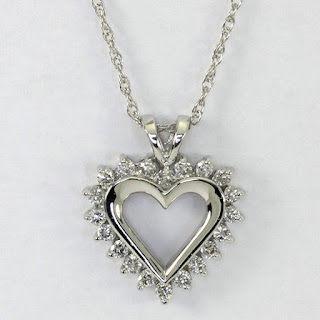
Popular Valentine's Day Gifts

http://www.ebay.com/itm/Diamond-heart-pendant-14K-white-gold-round-brilliants-70CT-open-sweet-1-long-/121805356360?hash=item1c5c2a3d48
Wondering what to give your loved one for Valentine’s Day? Take a look at the most popular Valentine’s Day gifts in the U.S., according to a survey from the National Retail Federation (NRF).
 
Not surprisingly, romantic standards such as candy and flowers are still among the most popular Valentine’s gifts given. Flowers are still number one among men, while women prefer to give greeting cards or candy to their spouses, friends or family members.
Here are the percentages of what American men and women over age 18 gave in 2014.
Greeting cards

44% men
58% women

Candy
47% men
50% women

Flowers
61% men
15% women

An evening out
39% men
36% women

Jewelry
29% men
9% women

Clothing
14% men
18% women

Gift cards
11% men
17% women

What people are spending
The NRF did a Valentine’s Day Consumer Spending Survey https://nrf.com/media/press-releases/cupid-shower-americans-jewelry-candy-this-valentines-day last year, conducted by Prosper Insights and Analytics. According to the results, the average person celebrating Valentine’s Day planned to spend $142.31 on candy, flowers, apparel and more, up from $133.91 in 2014, and total spending was expected to reach almost $19 billion.

While most (53.2%) plan to buy candy for the sweet holiday, spending a total of $1.7 billion, one in five (21.1%) plans to buy jewelry for a total of $4.8 billion, the highest amount seen since NRF began tracking spending on Valentine’s gifts in 2010.

Additionally, 37.8 percent will buy flowers, spending a total of $2.1 billion, and more than one-third (35.1%) will spend on plans for a special night out, including movies and restaurants, totaling $3.6 billion. Celebrants will also spend nearly $2 billion on clothing and $1.5 billion on the gift that keeps on giving: gift cards.

The survey found nine in 10 (91%) plan to treat their significant others/spouses to something special for the consumer holiday, with plans to spend an average of $87.94 on them, up from $78.09 last year. Additionally, 58.7 percent will spend an average of $26.26 on other family members and $6.30 on children’s classmates/teachers. A record one in five (21.2%) say they will include Fluffy and Fido in their Valentine’s Day gift-giving plans, looking to spend a mere $5.28 on average – which equates to a whopping $703 million on pint-sized gifts of all varieties.

Discount (35.2%) and department stores (36.5%) will be among the most visited locations for those looking for the perfect Valentine’s Day gift, as will specialty stores (19.4%) and florists (18.7%).

One-quarter (25.1%) say they will shop online and 13.3 percent will shop at a local or small business to find something unique for their loved one.

Men will spend nearly double what women plan to spend ($190.53 versus $96.58 on average, respectively.) Additionally, adults 25 to 34 will outspend other age groups at an average of $213.04; 35 to 44 year olds will spend an average of $176.21, and 18 to 24 year olds will spend an average of $168.95.

Looking for a unique, special gift for your Valentine? Shop Adina’s eBay store for stunning estate, vintage and antique fine jewelry, available at true wholesale prices. We have vast selection for women and men, and we will deliver a buying experience that’s above your expectations.

Monday, January 4, 2016

New Auction Record Set by "Blue Moon Diamond"

On November 11, 2015, a new record for any diamond ever offered at auction was set, according to a Reuters report. The "Blue Moon Diamond" sold for 48.6 million Swiss francs — the equivalent of $48.4 million — at Sotheby’s in Geneva, Switzerland to a Hong Kong buyer, making it the world’s most expensive diamond. Surprisingly to those in attendance, the successful bidder renamed the diamond, “Blue Moon of Josephine.”

At 12.03 carats, the Blue Moon is the largest cushion-shaped fancy vivid blue diamond ever to appear at auction. It is mounted on a ring and has the top grading of fancy vivid blue. Sotheby’s gave the diamond a pre-sale estimate of $35 million to $55 million.

Auctioneer David Bennett called the Blue Moon the "highest price per carat" ever obtained for any kind of stone, and the diamond set a world record for any jewel at more than $4 million per carat.
The blue diamond stone was found in South Africa’s famed Cullinan mine in January 2014. The distinctive blue color in diamonds is attributed to trace amounts of the element boron in the crystal structure.

The Blue Diamond Tops the Graff Pink

Until recently, the auction record had been held for five years by the Graff Pink diamond, which British billionaire jeweler Laurence Graff bought for almost $46 million at another Sotheby’s auction in Geneva in 2010.

Graff paid 45.4 million francs — almost $46 million — for the diamond and quickly renamed it, the “Graff Pink.” The rare pink diamond is rectangular shaped, and weighs 24.78 carats. It is among less than two percent of the world’s diamonds categorized as “potentially flawless” because it needs repolishing.

Graff’s buying price of $46 million at the time topped a previous world record for the selling price of a jewel at auction.

In 2013, Sotheby’s auctioned a pink diamond called the “Pink Star” for $83.2 million, but the buyer ultimately defaulted on the payment. The stone remains in the auction house’s inventory.

Other Big Sales at Sotheby’s

At the November 11 Sotheby’s auction, royal jewels, colored gemstones, and designer pieces by Van Cleef & Arpels, Cartier, and Harry Winston were among 410 lots that found new owners, bringing in $139 million.

A fancy vivid purple-pink, pear-shaped diamond ring sold for 13.9 million Swiss francs — approximately $14 million — the second-highest lot of the night.

An 8.48 carat Burmese ruby and diamond ring that belonged to the late Maria-Jose, the last Queen of Italy reached just 5.2 million francs, surprising those in attendance that it failed to meet the reserve price set by the seller.

Of interest to history buffs, a Cartier diamond and pearl tiara that survived Germany’s sinking of the Lusitania cruise liner 100 years ago — along with its Canadian owner Marguerite Lady Allan — sold for $800,000 after heated bidding, doubling its estimate.

A 15.20 carat fancy orange-pink diamond pendant owned by former James Bond actor Sean Connery sold for more than 4 million francs, tripling its estimate.

Tuesday, December 1, 2015

'Tis the Season to Sell Some Jewelry

The holidays are coming quickly, and with them the added expense of food, gifts, and travel. If you need some extra income, consider selling some of your nice, but unwanted, jewelry at your local pawn shop. Here’s some expert advice to get top dollar!

Understand the process. You don’t have to know the exact value of the jewelry you are selling, but it’s a good idea to have a general and realistic idea of what your piece is worth, and how the transaction will take place. With gold jewelry, for example, an appraiser will quote you a price based on the weight of the gold content—indicated in karats—also taking into account the current market price, and minus a handling fee. Solid gold is 24 karats. Most gold jewelry is less than that because it is mixed with other metals. If it contains precious or semi-precious gems, that should increase the value.

Get it appraised in person. There are many online jewelry companies that advertise that they buy and sell online. Some are legitimate, and others are not. How they generally work is, you mail them jewelry you want to sell, they appraise it and mail you back a check. To ensure that you are happy with the appraisal and amount offered, it’s best to get your jewelry appraised in person by a reputable appraiser at an established jeweler.

Seek out several appraisals. It’s smart to shop around and get your jewelry or coins appraised at more than one location. Once you have some jewelry stores or pawn shops in mind, call ahead and make sure the appraiser is Gemological Institute of America (GIA) educated. The GIA is the industry standard for gem and precious metal appraisals. A GIA-educated appraiser will abide by the strictest industry ethics and methods to ensure that a seller is given the fair market price for the piece being sold.

Realize the market fluctuates. The price of gold and silver changes daily based on various factors, including market demand, manufacturing supply, and the financial markets. It’s important to understand that the price you are quoted for a piece applies to the day that the piece is appraised and is based on the market value in the industry at that time.

On appraisal day … Don’t be afraid to haggle, within reason, and make sure your jewelry never leaves your eyesight. A legitimate appraiser will make a point to explain the process, do the appraisal in front of you, and answer any questions. Finally, trust your instinct. If you feel comfortable with the appraiser and the price and are ready to sell, go for it. If not, politely decline and say you’re going to think about it. Remember, selling your gold, silver or estate jewelry is not just about getting the most money—it’s also about the transaction and being happy with the outcome.

Meanwhile, if you’re looking for jewelry for a holiday gift, Adina has a lovely collection of estate, vintage and antique jewelry at true wholesale prices to help you help you make the perfect choice and save on your holiday budget. We have an extensive collection of fine jewelry necklaces, earrings, rings, pendants and more. Make sure you visit Adina by Empire Jeweler’s online store this season.

Monday, November 2, 2015

Know Your Gemstones? Citrine and Topaz True/False Quiz


Welcome to the November blog by Adina Jewelers! Think you know your gemstones? Test your knowledge of November’s birthstones, citrine and topaz, with our true or false quiz! Scroll down for the answers—but don’t cheat!
  1. Citrines are quartz crystals commonly found in igneous, metamorphic, and sedimentary rocks.
  2. The common color of citrines is blue and green.
  3. The word citrine is derived from the French word, citrin, which means yellow.
  4. Citrine is the gemstone for the zodiac sign of Scorpio, and the gemstone given for the 13th and 17th wedding anniversaries.
  5. In ancient times, citrine was worn as protection against bad skin, evil thoughts, snakebites, and even the plague.
  6. A gift of citrine is a symbol of flexibility and quick learning.
  7. Some believe citrine began as amethyst, the purple quartz, with the heat from molten rock changing it to yellow quartz.
  8. The presence of fluorine usually indicates that topaz is likely to be found.
  9. When topaz has yellow or green overtones, it is known as Imperial topaz, and can be very rare and expensive.
  10. It is widely believed that the word topaz is derived from the Sanskrit word, topas, which means fire.
  11. Topaz jewelry is given for the 4th, 19th and 23rd wedding anniversaries.
  12. Topaz is known as the “stone of the gods” for its strength.
  13. A gift of yellow topaz symbolizes friendship, strength, wisdom, and courage.
  14. Topaz was believed to ease itchy feet and cravings for sweets.
  15. The ancient Egyptians believed yellow topaz’s color came from the glow cast by the sun god, Ra.
  16. The ancient Greeks believed topaz could make its wearer fly.
November birthstone true/false answers:
  1. True.
  2. False. The common color of citrines is yellow and orange.
  3. False. The word citrin is a French word which means lemon.
  4. True.
  5. True.
  6. False. Citrine given as a gift symbolizes strength and hope.
  7. True.
  8. True.
  9. False. When topaz has red or pink overtones, it is known as Imperial topaz.
  10. True.
  11. True.
  12. False. Topaz is known as the “stone of strength.”
  13. True.
  14. False. Topaz was believed to ease bad tempers, cure insanity, and help insomnia.
  15. True.
  16. False. The ancient Greeks believed topaz could make its wearer invisible.

Thursday, October 1, 2015

Adina Gemstone Q&A: Opals

The opal is the birthstone for the month of October—the Zodiac sign of Libra—and the 14th wedding anniversary gemstone. Opals also have a rich history dating back to Ethiopia about 4,000 B.C. Whether you were born in October or not, test your knowledge of opals with Adina by Empire Jewelers' True or False quiz! Scroll down for the answers—but don’t cheat!
  1. The opal is an ancient mineral known as petrified silica gel that is found deep in the earth’s core where geothermal hot springs once existed.
  2. Opals are most commonly white in color, and usually contain a rainbow-like iridescence known as "opalescence” which changes the colors that appear in the stone depending on the angle it is viewed.
  3. The subcategory of opals known as precious opals are the most common and in demand because of their "opulence.”
  4. The word opal is derived from the Latin word "opalus," meaning precious jewel, as well as “upala,” the Sanskrit name for precious stone.
  5. Opals are given to celebrate a 14th wedding anniversary, and are a symbol of faithfulness and confidence.
  6. The Great Bard, Shakespeare, loved opals so much, he nicknamed them the “queen of the gems.”
  7. The ancient Romans called the opal “Cupid Paederos,” which translates to “a child beautiful as love.”
  8. In ancient Rome, opals were ground up and consumed because they were believed to be very nutritious.
  9. The opal is Australia’s national gemstone, and its indigenous people call opals “the flash in the desert.”
  10. Goober Pedy, Australia is known as “The Opal Capital of the World” because 51 percent of the world’s supply of opals are mined there.
  11. In 2008, NASA discovered opal deposits on Mars! Since opal is made up of mostly water, Mars may have contained water for billions of years.
October Birthstone True or False Answers:

  1. False. Opals are found near the earth's surface where geothermal hot springs once existed.
  2. True.
  3. False. Precious opals are the most in demand because of their "opalescence” or “play of color.” This is caused by a hydrous silicon dioxide material that causes the gemstone to flash iridescent colors when the opal is viewed from different angles.
  4. True.
  5. True.
  6. True.
  7. False. “Cupid Paederos” translates to “a child beautiful as love.”
  8. False. Ancient Romans would grind up and eat opals because they believed they had healing properties and the power to ward off bad dreams.
  9. False. The indigenous people of Australia call the opal “the fire in the desert.”
  10. False. The name of the city is actually Coober Pedy, Australia.
  11. True.
If you’re looking for opal jewelry, we’ve got an exquisite collection of fine opals necklaces, earrings, rings, pendants and more. Make sure you visit Adina by Empire Jeweler’s extensive online store. You’ll find antique and vintage estate opal jewelry at true wholesale prices.

Tuesday, September 1, 2015

Sapphire History and Lore

This month’s blog is a celebration of beautiful blue sapphires. Considered one of the most royal gemstones, September’s birthstone is rich in history and lore.

Sapphires have appeared in some of the most ornate and beautiful jewelry pieces ever created. Here’s a glimpse at some of the world’s most famous and highly valued sapphire jewelry pieces.

Princess Diana’s engagement ring

Following Prince Charles’ proposal, Lady Diana Spencer chose a diamond and blue sapphire engagement ring from a Garrard catalog, instead of having a diamond ring custom made for her, which was the royal custom.  The decision was controversial, but also launched her reputation as “The People’s Princess.” Since then, affordable replicas of her ring became so popular, that it became known as “the commoner’s ring.”

The ring has a large oval sapphire—estimated to be between 9 and 12 carats— surrounded by 14 round diamonds set in 18K white gold. The ring cost around $60,000 when it was purchased in 1981, and today has been estimated value between $500,000 and $4 million. Prince William inherited the ring following Princess Diana’s untimely death, and famously presented it to Kate Middleton, Duchess of Cambridge, when he proposed to her in November 2010.

Maria Alexandrovna’s sapphire brooch

Originally from Sri Lanka, The Maria Alexandrovna sapphire was purchased by Alexander II at the London Great Exhibition of 1862, and presented to his wife, Maria Alexandrovna. That is where it gets its name.

This sapphire is a 260.37-carat oval with an evenly distributed medium-dark saturated blue color. The sapphire was later set in a brooch consisting of 56.60 carats of smaller diamonds.

The Star of India

Discovered in Sri Lanka about 300 years ago and currently on display at the American Museum of Natural History in New York City, the Star of India is about 2 billion years old and weighs 563 carats—about the size of a golf ball—making it the largest gem-quality blue star sapphire in the world.
The presence of the mineral rutile gives the gemstone’s appearance a slightly milky quality, as well as the distinctive star effect, known as asterism. Tiny fibers of rutile in a three-fold pattern reflect incoming light in the star pattern. In addition to its great size, the Star of India is unique because it has asterisms on both sides of the gemstone.

On October 29, 1964, the world-famous sapphire was stolen from the American Museum of Natural History in New York City. Several months later, the uninsured Star of India was recovered in a locker in a Miami bus station.

The Stuart Sapphire

If you love jewels and ever visit London, be sure to see the Stuart Sapphire, which often goes unnoticed because it is located at the back of the Imperial State Crown.

The 104-carat Stuart Sapphire is a fine blue—though flawed—gem. It is oval in shape, about 1½ inches by 1 inch in width, and is set in a gold brooch. The gem is drilled at one end, probably so that it could be worn as a pendant.

Dating back to 1214, the Stuart Sapphire was owned by members of the Royal House of Stuart, for whom it was named. Robert II, the first monarch of the Stuart dynasty, was the first to own it, and it was later inherited by James II, who took it with him to France when he was deposed in the Glorious Revolution of 1688-89.

James II gave the sapphire to his son James Edward, who passed it on to his son, Charles Edward. Today, it is on display as part of the British Crown Jewels collection at the Tower of London, and is located on the back side of the British Imperial State Crown.

If you’re looking for sapphire jewelry, we’ve got an exquisite collection of fine sapphire necklaces, earrings, rings, pendants and more. Make sure you visit Adina by Empire Jeweler’s extensive online store. You’ll find antique and vintage estate sapphire jewelry at true wholesale prices.